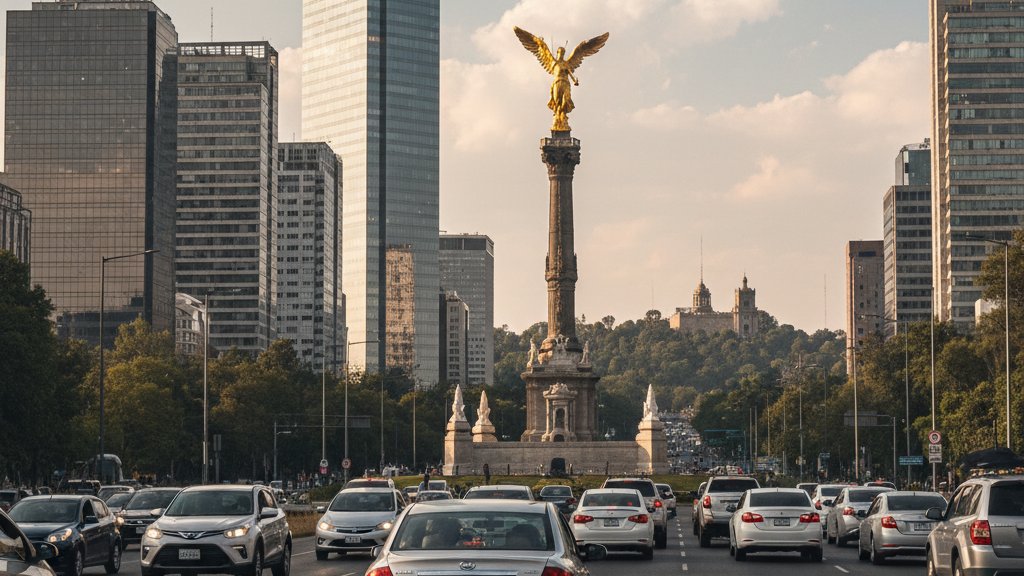
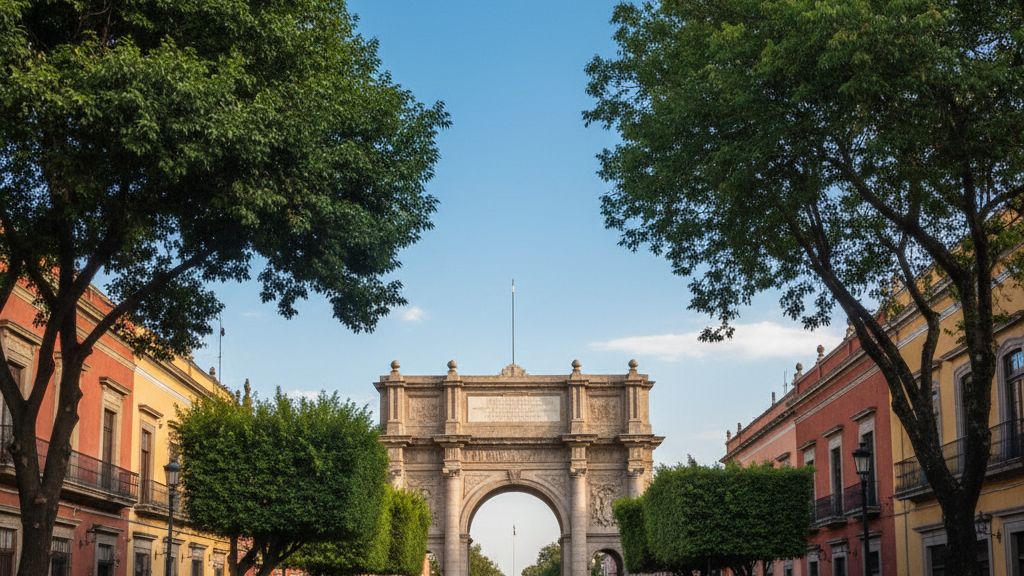
Book eligible cars with debit card or cash at pickup and drive from Cancun to Tulum, Merida to Chichen Itza, or explore cenotes across Quintana Roo.
Mexico covers nearly two million square kilometres, from the Caribbean coast of Quintana Roo to the Pacific shoreline of Baja California, the highlands of Jalisco, and the deserts of Sonora. Public transport links major cities, but reaching cenotes, archaeological sites, mountain villages, and coastal reserves demands a rental car. Highway 307 runs 380 km from Cancun south through Playa del Carmen, Tulum, and Bacalar; Highway 180 connects Merida to Valladolid and the Yucatan interior; and the cuota toll roads between Mexico City and Puebla shave hours off the journey. With distances so vast, a car transforms a week-long holiday into an itinerary that reaches Uxmal, Sian Ka'an, Isla Holbox ferry terminals, and Chichen Itza in a single trip.
We work with local rental companies across Mexico that offer eligible vehicles on a no-deposit, no-credit-card basis. When you search through the booking widget above, every car displays its payment requirements: some accept debit cards or cash at pickup without requiring a credit card for the deposit hold. This is not a waiver of the excess or a coverage upgrade - the excess remains as stated, and any damage follows the terms in your rental agreement. No deposit simply means the local company does not block funds on a credit card when you collect the keys; it is an independent parameter unrelated to insurance or protection packages.
You pay a booking advance online by card when you reserve. The balance is due at pickup, and the accepted payment methods - debit card, cash, or credit card - are shown in the search results and confirmed in your voucher. Requirements vary by individual car, not by category: one Nissan Sentra may accept debit cards while another requires a credit card. Use the filters to display only the vehicles that match the cards in your wallet.
Cars are collected at airport desks, city offices, or delivered to hotels, depending on the local company. Cancun International Airport (CUN) lies 20 km south-west of the Hotel Zone via Boulevard Luis Donaldo Colosio and Highway 307; Mexico City Airport (MEX) and Leon-Guanajuato Airport (BJX) also host rental counters. You choose the pickup time during booking, sign the rental agreement on arrival, and note any existing scratches or dents in the contract checklist. The voucher contains the local company's contact details and address.
We connect you with local rental providers across Cancun, Mexico City, Leon, Guadalajara, Cabo San Lucas, and beyond, filtering the fleet to show which cars accept your preferred payment method and whether a deposit hold is required.
Selected vehicles display "No Deposit" in search results, meaning the rental company will not block funds on a credit card when you collect the keys. The excess remains unchanged; this is purely a payment-flexibility feature.
Many cars in Cancun, Mexico City, and Leon accept debit cards or cash for the balance at pickup. Use the "No Credit Card" filter to see only those vehicles, and check each car's payment note before you book.
The booking advance is always paid online by card. The remainder is settled when you collect, using whichever method the specific car allows. If your debit card has a low limit, consider raising it temporarily to cover the rental balance.
Cancel or amend your reservation without charge up to the deadline shown in your confirmation. Policies vary by car and season, so read the terms on the voucher and in your booking email.
Collect from desks at CUN, MEX, and BJX terminals, downtown offices, or request delivery to your hotel. Availability and any delivery fees are confirmed at booking; return arrangements appear in the voucher.
The fleet includes Nissan March and Chevrolet Aveo with manual gearboxes for fuel economy, plus automatic Kia Rio sedans, Nissan Sentra intermediates, and Chevrolet Captiva SUVs for longer highway journeys and family groups.
Mexico's geography demands a car to link Caribbean beaches, colonial cities, cloud forests, and desert valleys. Below are eight routes that showcase why rental cars remain essential for independent travel across the country.
Drive 68 km south from Cancun on Highway 307 to reach Playa del Carmen in under an hour. The cuota toll section is smooth and fast, with exits marked for Puerto Morelos and the Riviera Maya hotel strip. Park near the ferry terminal on Avenida Juarez; passenger ferries to Cozumel depart every hour and take 45 minutes, but cars cross on a separate cargo ferry that must be booked days in advance. A compact Nissan March or Toyota Yaris handles the highway comfortably, and fuel stations cluster every 20 km along the route. If you plan to take the car to Cozumel, confirm the rental agreement allows island crossings and arrange the cargo ferry ticket independently - it is not included in your hire.
Tulum sits 130 km south of Cancun, a 90-minute drive on Highway 307. The archaeological zone perches on cliffs above white sand, and the pueblo sprawls inland with cenotes, beach clubs, and the Sian Ka'an Biosphere entrance nearby. Traffic slows through Playa del Carmen and again at the Tulum junction, where the free road merges with the toll. An economy sedan such as a Chevrolet Aveo offers decent boot space for luggage and snorkelling kit. Park in the official lot at the ruins or along the beach road, where attendants collect a few pesos. Fuel up in Playa or Tulum town; stations become sparse once you leave the coast towards Coba or the Sian Ka'an reserve gate.
From Cancun, Chichen Itza lies roughly 200 km west via the cuota toll Highway 180D, a journey of two and a half hours. The libre free road runs parallel and adds 30 minutes but passes through Valladolid, where you can stop for lunch and visit Cenote Zaci. Both routes cross flat scrubland dotted with henequen plantations and small villages. Arrive early - the site opens at 8 AM, and coach tours flood the plaza by mid-morning. A Kia Rio or Nissan Sentra in automatic handles the straight toll road with ease, and air conditioning is non-negotiable under the Yucatan sun. Fuel and snacks are available at the toll plazas and in Valladolid. If continuing to Merida, budget another 120 km westbound on Highway 180.
Merida, the capital of Yucatan state, sits 320 km from Cancun along Highway 180, roughly four hours by cuota toll road. The city's colonial centre, markets, and museums warrant a full day. From Merida, Uxmal lies 80 km south on Highway 261, an hour's drive through low hills and forests. The Puuc Route links Uxmal with smaller sites - Kabah, Sayil, Labna - along a winding road that requires careful navigation. A comfortable intermediate sedan such as a Nissan Sentra suits the long toll highway; families may prefer a Chevrolet Captiva SUV for extra boot space. Fuel is plentiful in Merida, less so on the Puuc loop, so fill up before heading south. Merida also serves as a base for day trips to Celestun flamingo reserve and the cenotes near Homun.
Holbox is a sand-street island off the north coast of Quintana Roo, reached by ferry from Chiquila. The drive from Cancun to Chiquila covers 150 km and takes about two hours: follow Highway 307 north to El Ideal, then turn west on the Chiquila road. The final 30 km are narrow, potholed in places, and lined with mangroves. Park in the guarded lots at Chiquila port - your car cannot cross to the island, where golf carts and bicycles replace motor vehicles. A Renault Kwid or Nissan March handles the journey, but a Toyota Yaris offers more ground clearance if you encounter deep potholes. Ferries run frequently during daylight; confirm the last return sailing before you leave the car. Fuel stations are sparse after El Ideal, so tank up in Cancun or Leona Vicario.
Bacalar lies 340 km south of Cancun, a four-hour drive through Tulum, Felipe Carrillo Puerto, and the sleepy towns of southern Quintana Roo. The Laguna de Siete Colores stretches along the western edge of town, fringed by wooden piers, kayak rentals, and low-key guesthouses. Highway 307 is a fast two-lane road, but livestock and speed bumps - topes - appear without warning in villages. A sedan like a Kia Rio in automatic makes the long haul comfortable; for side trips to cenotes or the Kohunlich ruins, consider a Chevrolet Captiva SUV. Fuel stations punctuate the route every 50-70 km. Bacalar is also the jumping-off point for crossing into Belize via Chetumal, 40 km south; if you plan that, arrange a written authorization letter from the rental company well in advance, and confirm the car's insurance covers Central America.
Valladolid sits 160 km west of Cancun on Highway 180, a two-hour drive that splits between toll and free sections. The colonial town squares, convents, and market stalls offer a counterpoint to the beach resorts. Cenote Zaci lies in the town centre; Cenote Suytun and Cenote Xkeken are 7 km west along rural roads. Further afield, the Ek Balam ruins stand 20 km north, and the flamingo lagoons of Rio Lagartos are another 100 km. A compact Toyota Yaris in manual suits these short hops; automatic is available if you prefer. Cenote access roads can be rough gravel, but passenger cars manage with care. Park in the town or at cenote gates, where attendants charge a small fee. Fuel stations are plentiful in Valladolid; stock up before heading to Rio Lagartos or deep into the Yucatan interior.
The reserve begins 10 km south of Tulum, where Highway 307 meets the coast road into the protected zone. The paved section ends at the arch; beyond lies 50 km of sand and limestone track to Punta Allen fishing village. Ordinary sedans reach the arch and the first few beaches; the full route to Punta Allen demands a pickup with high clearance. Toyota Hilux 4x4 trucks, available through the search above, handle the deep ruts, washboard sections, and tidal crossings. Expect three hours one-way to Punta Allen in dry season; after rain, parts become impassable. Bring water, snacks, and a full tank - there is one fuel pump in Punta Allen, but supply is erratic. If your rental agreement permits off-road driving, confirm the excess and ensure you carry the contract, as police checkpoints may ask to see it. For an easier introduction, hire a guide in Tulum for a boat tour from Muyil lagoon into the reserve's canals.
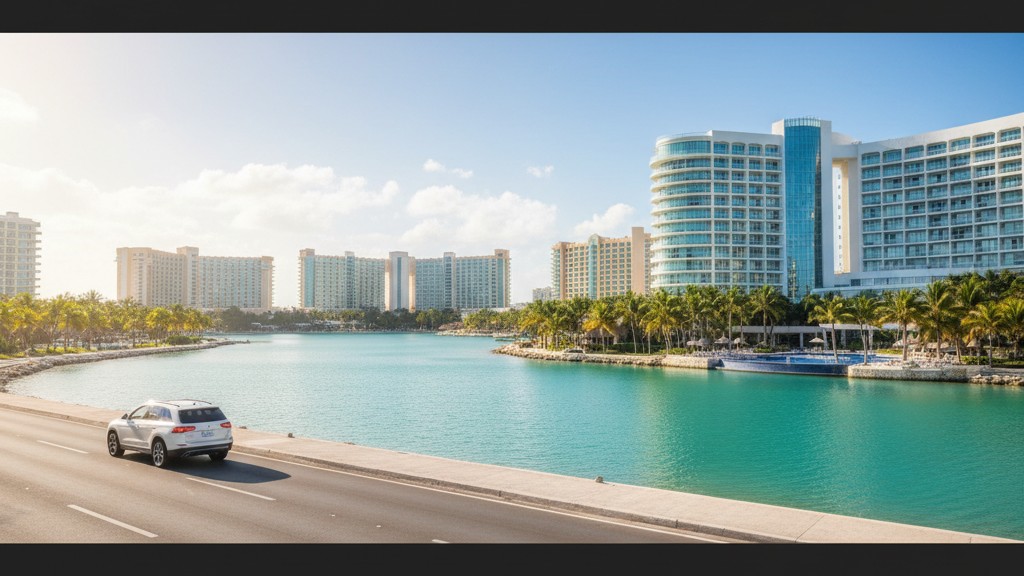
The fleet spans mini hatchbacks for tight city parking to 4x4 pickups for gravel cenote tracks. Below is a snapshot of common models; actual availability appears in the booking widget, filtered by your dates and pickup location.
| Car Model | Category | Transmission | Best For |
|---|---|---|---|
| Renault Kwid | Mini | Manual | City streets and short trips around Cancun |
| Nissan March | Economy | Manual | Couples and solo travellers, fuel efficiency |
| Chevrolet Aveo | Economy sedan | Manual | Highway trips along the coast |
| Toyota Yaris | Compact | Manual / Automatic | Riviera Maya and Playa del Carmen drives |
| Kia Rio | Compact sedan | Manual / Automatic | Longer trips to Merida and Chichen Itza |
| Nissan Sentra | Intermediate sedan | Automatic | Comfortable highway cruising on cuota roads |
| Chevrolet Captiva | SUV | Automatic | Families and groups exploring Yucatan |
| Toyota Hilux | Pickup 4x4 | Manual | Off-road cenote routes and Sian Ka'an |
These models are examples; the live search shows the precise vehicle or group confirmed by each local company. If you need high-clearance pickups or SUVs for unpaved cenote access roads, use the category filter and check the individual car's specifications in the results. Transmission type, luggage capacity, and payment options all appear on each listing before you book.
Reserving online takes minutes. You pay a booking advance immediately, receive a voucher by email, and settle the balance when you collect the keys.
Enter your pickup location, dates, and times in the widget at the top of this page. Results display every available car with its category, transmission, payment methods, deposit requirement, and excess. Apply filters for "No Deposit" or "No Credit Card" to narrow the list, then click through to read the full terms and see photos.
Once you choose a car, you pay a booking advance by debit or credit card on our secure checkout. This advance is part of the total rental cost, not an extra fee. You will see the balance due at pickup and the accepted payment methods - debit card, cash, or credit card - for that specific vehicle. No money is taken by cash online; card payment is mandatory for the advance.
Your confirmation email arrives within minutes, containing the voucher with the local rental company's name, address, phone number, opening hours, and a breakdown of what you paid and what remains due. Print the voucher or save it on your phone; you will present it at the counter along with your passport, driving licence, and payment card.
Arrive at the pickup location at the time you selected. The rental agent checks your documents, takes payment for the balance, and walks you around the car to note existing damage in the contract. If a deposit hold is required, the amount and method appear in your voucher; if the car is marked "No Deposit," no funds are blocked. Sign the agreement, collect the keys, and drive away. Return the car with the same fuel level and note any new marks before you hand back the keys.
Offering cars without a credit-card deposit hold simplifies pickup for travellers who carry only debit cards or prefer to pay the balance in cash. Here is how the system operates and what you need to know before booking.
In a standard rental, the local company blocks a sum on your credit card as security against damage or fuel shortfalls; that hold is released when you return the car undamaged. With a no-deposit vehicle, the rental company does not place any hold at all. You still sign a contract with an excess - the amount you pay if the car is damaged - but no funds are frozen during the hire period. This is shown as a "No Deposit" badge in search results. Each car has its own policy: most locations in Cancun, Mexico City, and Leon accept debit card or cash payment without requiring a credit card for the deposit, so use the filter to show only those vehicles. The excess, coverage options, and fuel policy remain identical whether a deposit is taken or not; deposit and excess are independent parameters.
We partner with rental providers across Mexico who have built a client base through transparent terms and verified reviews. They find that travellers who choose no-deposit cars tend to drive carefully, report issues promptly, and return vehicles on time. By skipping the credit-card hold, these companies attract customers who might otherwise book elsewhere, and they avoid the administrative overhead of processing deposit blocks and releases. There are no hidden fees or penalties replacing the deposit; the contract you sign at pickup states all charges clearly. Inspections at both collection and return follow the same checklist used for deposit vehicles, and any damage is billed according to the excess stated in your voucher.
Every rental in Mexico requires a valid passport, a national driving licence held for the period specified in the car's terms - usually one or two years - and a card for the booking advance. An International Driving Permit is recommended and may be requested at the counter, particularly outside major tourist zones. Age and licence-tenure rules vary by vehicle, not by category, so check each listing. If the car accepts debit cards or cash for the balance, that detail appears in the search results and voucher; if your debit card has a low daily limit, contact your bank to raise it temporarily. At pickup, the agent may photocopy your documents and take a contact number. For more detail on accepted cards and payment flow, visit our payment methods page.
Mexican roads range from six-lane toll highways to single-track mountain passes. Local rules, road conditions, and customs differ from Europe and North America, so a few hours of research can prevent confusion and fines.
We list vehicles at airports, city offices, and hotels across the country. Below are the primary gateways; use the booking widget to search other towns, including Guadalajara, Cabo San Lucas, Merida, and Puebla.

Cancun International Airport sits 20 km south-west of the Hotel Zone, connected by Boulevard Luis Donaldo Colosio and Highway 307. Rental desks fill the arrivals hall in both terminals; some companies operate from off-site lots a shuttle ride away. Downtown Cancun offices serve travellers already at their hotel who prefer to collect a car mid-stay. Traffic along the Hotel Zone Boulevard peaks mid-morning and late afternoon; parking at beaches and malls is plentiful but fills fast in high season. Cancun is the gateway to the Riviera Maya, Chichen Itza, Isla Mujeres ferry, and the northern Yucatan cenote belt.

The capital sprawls across a high plateau ringed by volcanoes. Mexico City International Airport, east of the historic centre, hosts rental counters in Terminal 1 and Terminal 2; a free train links them airside. Driving inside the city demands patience - traffic is dense, parking scarce, and the Hoy No Circula programme restricts certain plates on weekdays based on the last digit. Many visitors collect at the airport and drive straight out to Teotihuacan, Puebla, or Cuernavaca. If you plan days exploring the city itself, collect from a downtown office near your hotel; Uber and metro cover the centre efficiently without the stress of parking.

Leon's airport, officially Guanajuato International Airport or Del Bajio, lies 30 km east of the city on the highway to Silao. Rental desks operate in the terminal; some companies deliver cars to hotels in Leon or Guanajuato colonial centre, 30 km further into the mountains. Leon is the industrial and commercial hub of Guanajuato state; the main reason to rent here is to explore the colonial triangle of Guanajuato city, San Miguel de Allende, and Queretaro, or to head west into the Sierra Madre towards Zacatecas. Roads are good, fuel plentiful, and the highland scenery dramatic.
Quick answers to common questions. For a full list, visit our FAQ page, or read customer reviews to see how other travellers experienced no-deposit rentals in Mexico.
When you book a car marked "No Deposit," the local rental company does not block any funds on a credit card when you collect the keys. You still sign a contract with an excess - the maximum you pay if the car is damaged - but no deposit hold is placed during the rental period. This is a separate feature from insurance or coverage; the excess remains as stated, and any damage is charged according to the terms in your agreement. Most no-deposit cars in Cancun, Mexico City, and Leon also accept debit cards or cash for the balance payment, giving you flexibility if you do not own a credit card.
Yes, many vehicles accept debit cards or cash at pickup for the balance payment. Use the "No Credit Card" filter in the search results to display only those cars. You must still pay the booking advance online by card - debit or credit - when you reserve. The payment methods accepted for the balance are shown on each car's listing and confirmed in your voucher. If your debit card has a low daily spending limit, contact your bank to raise it temporarily so the rental company can process the payment.
When you complete the booking, you pay a booking advance by card through our secure checkout. This advance is part of the total rental cost. The remaining balance is due when you collect the car, using the payment method shown in the search results - debit card, cash, or credit card, depending on the specific vehicle. No cash payment is accepted online; the advance must be paid by card. The voucher breaks down what you have paid and what remains due, including any optional extras such as a second driver or child seat that you add at pickup.
You need a valid passport, a national driving licence held for the minimum period stated in the car's terms - usually one or two years - and a card for payment. An International Driving Permit is recommended and may be checked at the counter, particularly outside major tourist areas or if your licence is not in Roman script. Minimum age and licence tenure vary by individual car, not by category, so check the requirements in the search results. At pickup, the agent may photocopy your documents and ask for a local phone number or hotel address.
Crossing into Belize or Guatemala requires written authorization from the rental company, arranged well in advance of your trip. Not all companies allow cross-border travel, and those that do may charge a fee and require proof of insurance valid in Central America. You must declare your intention to cross when you book; the authorization letter, if granted, will be included in your documents at pickup. Crossings at Chetumal-Belize and Tapachula-Guatemala involve customs and immigration stops; budget extra time and carry your passport, rental agreement, and authorization letter. Do not attempt to cross without permission - you may be turned back or face penalties.
Cancun International Airport has rental desks in the arrivals hall of Terminal 2, Terminal 3, and Terminal 4; Terminal 1 is currently closed. After collecting your luggage and clearing customs, follow signs for "Arrendadoras" or "Car Rental." Your voucher states the company name and desk location. Some companies operate from off-site lots a short shuttle ride away; in that case, look for the company representative holding a sign in the arrivals area. Present your voucher, passport, driving licence, and payment card, sign the contract, and note any existing damage before driving away. Exit the airport via Boulevard Luis Donaldo Colosio, which merges with Highway 307 south towards the Hotel Zone and Playa del Carmen.
Cuota highways charge a toll in return for smooth tarmac, fewer junctions, emergency services, and rest areas with fuel and food. They are faster and generally safer, cutting hours off long journeys. Libre roads run parallel to most cuotas, cost nothing, and pass through towns and villages, adding time but offering local colour and cheaper fuel or food stops. For example, Highway 180D from Merida to Cancun is cuota; Highway 180 libre follows the same route but takes an hour longer. Tolls are paid at plazas in cash or by card; keep small notes handy. If you are not in a hurry, the libre roads provide a closer look at rural Mexico; for airport transfers or long hauls, the cuota is worth the cost.
Most bookings include free cancellation up to a deadline stated in your confirmation email - often 24 or 48 hours before pickup. Cancel or amend online through the link in your voucher, and any refund is processed to the card you used for the booking advance. Policies vary by car, season, and local company, so read the terms before you book. If you cancel after the free-cancellation window, a fee may apply; if you simply do not show up, the booking is forfeited. During hurricane season, some companies waive cancellation fees if a named storm forces airport closures or evacuation orders.
Manual cars dominate the economy and compact segments and are typically cheaper. If you learned to drive manual and feel comfortable with a clutch on hills and in traffic, they work fine. Automatic transmission is standard on larger sedans such as the Nissan Sentra and on SUVs like the Chevrolet Captiva, making highway cruising and city stop-start easier. Cancun and Mexico City traffic can be heavy, and the Yucatan's flat roads suit either type. If you are unfamiliar with manual gearboxes, book an automatic - stalling at a busy junction or on a steep tope is stressful. The booking widget shows transmission type for every car; filter by "Automatic" if that is your preference.
One-way rentals - collecting in Cancun and returning in Mexico City, for example - are possible but depend on the local company and vehicle availability. A one-way fee usually applies, and the cost appears in your search results if you enter different pickup and drop-off locations. Not every car or company permits one-way hires, and remote drop-off points may be excluded entirely. If you plan a linear itinerary, such as Cancun to Merida or Mexico City to Oaxaca, search with both locations specified and compare the total cost against a round-trip rental with a positioning flight or bus. Contact details for the rental company are in your voucher if you need to confirm arrangements.
Search the fleet above, filter by no deposit and no credit card, read the terms on each listing, and pay the booking advance online. Your voucher arrives by email within minutes, and you collect the keys at your chosen time and place. Whether you drive Highway 307 to Tulum, toll roads to Chichen Itza, or gravel tracks into the Sian Ka'an reserve, a rental car turns Mexico's vast geography into an itinerary under your control.